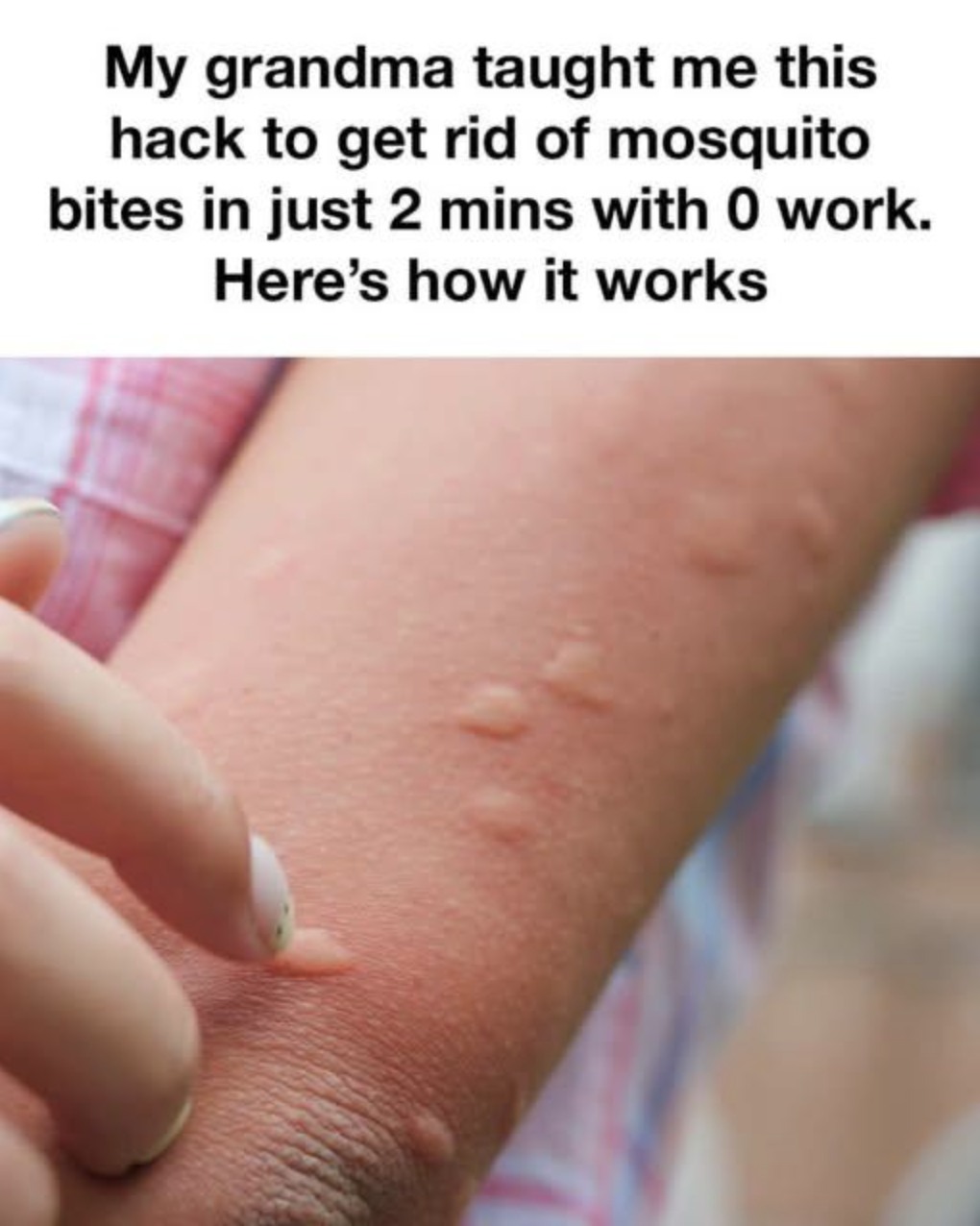
Summer always brings its own mix of pleasures and nuisances, and few things are more irritating than the sting of mosquito bites. No matter how many repellents we spray or citronella candles we light, these persistent little insects often find their way to us, leaving behind those maddeningly itchy welts. As temperatures rise, social media becomes flooded with quick-fix remedies, with one hack in particular gaining massive attention: the hot spoon method.
The trend is simple yet dramatic. Videos rack up millions of views showing people heating a spoon in hot water or with another heat source, then pressing it directly onto the bite for a few seconds. According to its promoters, this method can bring near-instant relief, with some even swearing that the itch disappears entirely in under a minute. It’s easy, inexpensive, and requires no more than a spoon and some hot water—making it a tempting option for anyone desperate for a cure.
But before embracing the spoon-as-savior trick, it helps to understand what’s really happening under the skin. Mosquitoes bite for one simple reason: survival of their species. As the Mayo Clinic explains, it’s only female mosquitoes that feed on blood. They require the protein and iron found in blood to produce eggs, which means every itchy welt is a small contribution to the next generation of these pesky insects. When they pierce the skin, they release saliva to prevent clotting, and it’s this saliva that triggers an allergic reaction. The body responds with inflammation, redness, and—most maddening of all—an itch that can last for days.
So, does the hot spoon method actually work? Experts agree there’s a kernel of truth. Heat applied to the skin can dull the itch temporarily by “distracting” the nerves. Dr. Calvin Williams, a dermatologist from Texas, compared the sensation to a parent kissing a child’s scraped knee—it doesn’t heal the wound, but it soothes in the moment. The logic is that heat disrupts the itch signal before it reaches the brain, offering brief respite.
However, that relief comes with significant risks. Dermatologists warn that at-home attempts can easily go wrong. Dr. Kevin Wang of Stanford notes that most people won’t measure the exact temperature of their spoon before pressing it to the skin. Water that feels hot enough to “do the job” might be hot enough to burn, especially when applied directly to sensitive or already inflamed skin. In worst cases, instead of an itchy bite, you’re left nursing a blister or even a first-degree burn. “There are far safer and more effective ways to treat mosquito bites,” Wang stresses.